Message from the Chairman of the Board of Directors
Updated: February 13, 2026
Japan Society of Gene and Cell Therapy (JSGCT)
To Members and Stakeholders of the Japan Society of Gene and Cell Therapy (JSGCT),
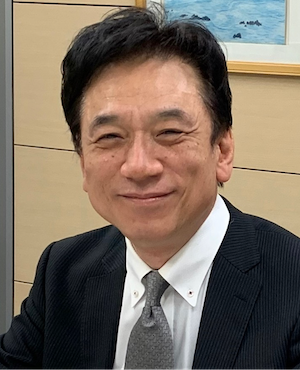
I am deeply honored to have been elected Chairman of the Board of Directors at the first Board of Directors meeting of JSGCT in 2025, succeeding Prof. Ryuichi Morishita. This marks my appointment as the second Chairman of the Board of Directors since JSGCT became a general incorporated association, and the fifth since its founding as a voluntary organization. I would like to express my sincere gratitude to the directors, councilors, members, and all stakeholders of JSGCT, and to take this opportunity to offer my greetings as the newly appointed Chairman of the Board of Directors.
Our society has a distinguished history spanning 30 years. The first annual meeting of the Japan Society of Gene Therapy (JSGT), the predecessor of JSGCT, was held in 1995—the same year that Japan’s first gene therapy clinical research was conducted at Hokkaido University. JSGCT is therefore one of the earliest professional societies dedicated to gene therapy in the world.
The 1990s were a time of great expectations for gene therapy, with clinical development actively pursued worldwide. However, just as evidence of therapeutic efficacy began to emerge, the field entered a prolonged winter. This followed a fatal adverse event related to an adenoviral vector in 1999 and the subsequent development of leukemia in multiple patients in France in 2002 due to retroviral vectors. Membership in JSGT declined to approximately 200, and it became extremely difficult to obtain competitive research funding for gene therapy. Similar circumstances were observed in the United States; Dr. Carl June of the University of Pennsylvania, a pioneer of CAR-T cell therapy, has remarked that obtaining research funding from the NIH was extremely difficult during that period.
Through persistent efforts by researchers worldwide, this long winter was eventually overcome. Since the late 2010s, a variety of gene and cell therapies have been successfully translated into marketed clinical products. Over the past two decades in particular, major technological breakthroughs have been achieved despite challenging circumstances. These include improvements in vector organ and cell selectivity, as well as the development of technologies that enhance therapeutic efficacy while reducing adverse effects. As a result, the number of diseases—especially monogenic disorders and hematological malignancies—for which gene and cell therapy can provide dramatically improved outcomes continues to grow.
Former Chairman of the Board of Directors Prof. Morishita accurately recognized the significance of this critical period and implemented major structural reforms to transform JSGCT into a society capable of meeting the expectations not only of researchers, but also of clinicians and society at large. One notable outcome of these reforms is the JSGCT Certification System. This system aims to cultivate specialists who can appropriately address issues unique to gene therapy in clinical settings, including compliance with the Cartagena Protocol on Biosafety and the management of adverse events. Although the system currently targets physicians and dentists, discussions are underway—under the leadership of Director and Committee Chair Prof. Hiroshi Fukuhara—to expand the program to include facility certification and the development of related educational programs. These initiatives are expected to be realized within the next few years.
In addition, last year JSGCT joined the Federation of Japanese Medical Societies of Internal Medicine, with the aim of promoting the sound integration of gene and cell therapy into clinical practice and facilitating appropriate reimbursement for related medical procedures. At the same time, serious adverse events unique to gene therapy remain an important challenge, even as multiple products are now in clinical use. In particular, immune-mediated organ damage and long-term delayed adverse events will continue to be critical subjects of research.
On the international front, JSGCT has initiated collaboration with gene therapy–related societies in Europe and the United States as a core member of the Coalition of International Gene Therapy Societies. This collaboration has two primary objectives: first, to advocate for regulatory and legislative improvements in each country to facilitate the multinational approval of gene therapies; and second, to promote the development of early-career researchers. JSGCT is expected to play a central role in these efforts alongside the American Society of Gene & Cell Therapy (ASGCT) and the European Society of Gene & Cell Therapy (ESGCT).
More Science for Better Safety and Outcomes
We aspire to serve as a forum for advancing science in order to realize safer and more effective gene and cell therapies. Building upon a strong scientific foundation, JSGCT will continue to evolve as a comprehensive medical society that is increasingly open and responsive to society.
We sincerely ask for your continued support and cooperation.
August 3, 2025
Yoshikazu Yonemitsu, M.D., Ph.D.
Chairman of the Board of Directors, Japan Society of Gene and Cell Therapy
Professor, Graduate School of Pharmaceutical Sciences, Kyushu University